
Getting charged the excess is the easy part, mechanically speaking — the rental company holds it against your card, or takes it outright, and the transaction is done in seconds. Getting it back, if you had coverage that was supposed to reimburse you, is where people quietly lose money simply by not knowing what paperwork was required, or assuming the process would sort itself out the way the initial charge did. It doesn’t. Reimbursement is its own separate process, and it runs entirely on documentation — the kind of thing that’s genuinely easy to gather in the moment and genuinely painful to reconstruct three weeks later from memory.
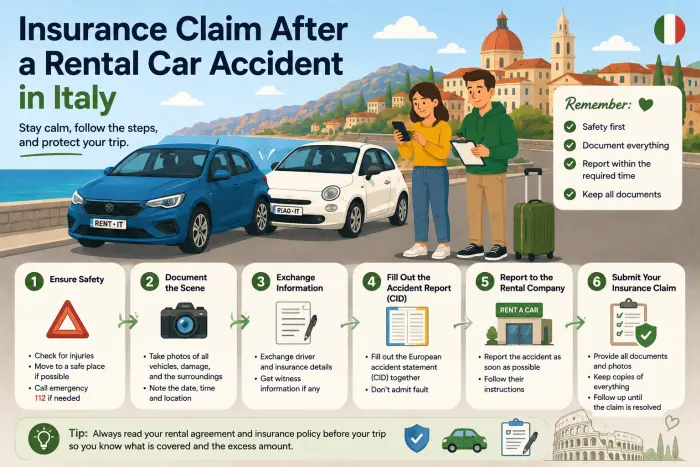
If you’re charged an excess for damage and you have third-party excess insurance, a covering credit card, or your own travel policy, reimbursement isn’t automatic — you file a claim afterward, and the paperwork you gather at the time of the incident is what determines whether that claim gets approved. Independent insurers commonly advertise fast turnaround once a complete claim is submitted, but “complete” is doing a lot of work in that sentence, and an incomplete file is the single most common reason a claim drags on or gets denied outright.
The document checklist that actually matters
Every reimbursement path — third-party excess insurer, credit card benefit, or travel insurance — asks for some version of the same core file. Assembling it at the time of the incident, not weeks later, is what separates a fast claim from a frustrating one.
| Document | Why it’s needed |
|---|---|
| Signed rental agreement | Confirms the vehicle, dates, and coverage tier you actually had |
| CAI form (Constatazione Amichevole di Incidente) or police report | Establishes the official record of what happened, required for anything beyond a minor scrape |
| Photos of the damage, timestamped | Backs up the rental company’s own assessment, or contests it if it’s inflated |
| Rental company’s invoice or charge showing the excess amount taken | The actual proof of what you’re claiming back |
| Your original pickup photos of the car’s pre-existing condition | Protects you if there’s any dispute about what damage was already there |
Missing any one of these is the most common reason a claim stalls. Insurers process what’s in front of them — a gap in the paperwork usually means a request for more documents, and every round trip adds days or weeks to a process that’s otherwise fast.
Where the CAI form fits into all of this
If your situation involves another vehicle, the CAI form is central to the entire claim, not just a roadside formality — it’s the document that establishes fault and sequence of events for the eventual insurance process, on both the RCA and CDW sides. We cover filling it out and when it’s mandatory versus optional in our guide to what to do after a rental car accident in Italy; this article picks up from there, focused specifically on what happens to that paperwork once the roadside part is over and you’re trying to actually recover what you paid.
Rental company CDW vs third-party insurer: different claims, different speed
If you paid for the rental company’s own Super CDW or zero-excess option, there’s typically no separate claim to file at all — the reduced or eliminated excess is already reflected in what they charge you at drop-off, since you paid for that protection upfront through the daily rate. The claims process described here applies specifically to situations where you’re recovering money after the fact: independent excess insurance, a credit card benefit, or a travel policy, all of which work on a pay-then-reimburse basis rather than a pay-nothing-upfront basis. That’s the fundamental tradeoff behind the pricing gap we cover in our CDW vs Super CDW comparison — the cheaper options save money precisely because you’re the one fronting the claims paperwork instead of the rental company absorbing it instantly.
What a realistic timeline looks like
Independent excess insurers commonly advertise turnaround measured in days once a complete file is submitted — some cite processing the large majority of claims within a few business days. Credit card and traditional travel insurance claims tend to run slower, often weeks rather than days, and may require additional back-and-forth if their documentation standards differ slightly from what the rental company provided. None of these timelines start until you submit a complete claim, which is why the document checklist above matters more than which provider you’re claiming through — a fast insurer with an incomplete file will still be slow.
💸 Italy Car Rental Sale – Up to 40% Off Today
Find the cheapest car rental deals in Rome and across Italy. Compare prices instantly and lock in your discount before it's gone.
If you think the rental company’s charge itself is wrong
There’s a separate question worth distinguishing from the reimbursement process: is the excess charge itself legitimate? If you believe the damage was pre-existing, inflated, or simply not what you caused, that’s a dispute with the rental company directly, not a matter for your excess insurer to resolve. Your pickup photos are the entire case here — a well-documented walkaround from the start of the rental is what lets you push back credibly on a charge you don’t believe is accurate. Most rental companies have a formal dispute process for exactly this, separate from their standard customer service line, and it’s worth asking for it by name rather than simply arguing with the first person who answers. Whether you win that dispute or not, keep pursuing your insurance claim for the amount you were actually charged in parallel — the two processes don’t have to wait on each other.
Keeping everything in one place, digitally
The single easiest thing to get right in this entire process is organization, not paperwork quality. Photograph every document as soon as you have it — the CAI form, the rental company’s invoice, your pickup photos — and keep them together in one folder on your phone or cloud storage rather than scattered across emails and printed receipts. Claims that move fastest tend to be the ones where every required document is ready to attach in a single submission, rather than trickling in over several follow-up emails as the traveler tracks down what they need after the fact. This matters even more if the incident happens mid-trip and you’re filing the claim from home weeks later, once memory of exactly what happened has started to fade.
A note on small damage that isn’t worth claiming
Not every scrape is worth the paperwork. If the damage falls below your policy’s deductible, or between your credit card’s deductible and the rental company’s charge, filing a claim can cost more in time and hassle than it recovers — and for some personal auto policies back home, filing a small claim can affect future premiums in a way that outweighs the reimbursement itself. It’s worth doing rough math before starting the process: compare what you were actually charged against what filing will realistically get back, factoring in the time the paperwork will take.
Frequently asked questions
Do I automatically get my excess back if I have third-party insurance? No. You need to actively file a claim with your provider, supported by documentation — reimbursement isn’t automatic just because you had coverage in place.
What documents do I need to claim back a rental car excess in Italy? Typically the signed rental agreement, a CAI form or police report if another party was involved, timestamped photos of the damage, the rental company’s invoice showing the excess charged, and your original pickup photos of the car’s condition.
How long does an insurance claim for a rental car in Italy usually take? It varies by provider. Independent excess insurers often process complete claims within a few business days; credit card and traditional travel insurance claims can take several weeks, especially if documentation needs to be resubmitted.
Do I need to file a claim if I bought the rental company’s own zero-excess coverage? Generally no. That protection is usually applied automatically at drop-off rather than requiring a separate reimbursement claim, since you already paid for it through the daily rate.
What happens if my claim documentation is incomplete? The insurer typically requests the missing pieces before processing continues, which is the most common reason a claim takes longer than the provider’s advertised turnaround time.
Is it worth filing a claim for very minor damage? Not always. If the amount is close to or below your policy’s deductible, or the paperwork effort outweighs the likely reimbursement, it may cost more in time than it recovers.