
Two separate paths exist for contesting a traffic fine in Italy, and picking the wrong one is the single most common reason an appeal goes nowhere. An appeal sent to the provincial Prefect is fast to file but rarely succeeds — and if it’s rejected, the fine typically doubles automatically. An appeal filed with the Giudice di Pace (Justice of the Peace) takes longer and requires more effort, but has genuinely better odds when the case is well-documented. Neither path is covered in the detail it deserves by most guides, including this site’s own speeding fines and ZTL zones pages, which explain what the fines are and how they’re billed but stop short of the appeal mechanics themselves — exactly why this deserves its own breakdown.
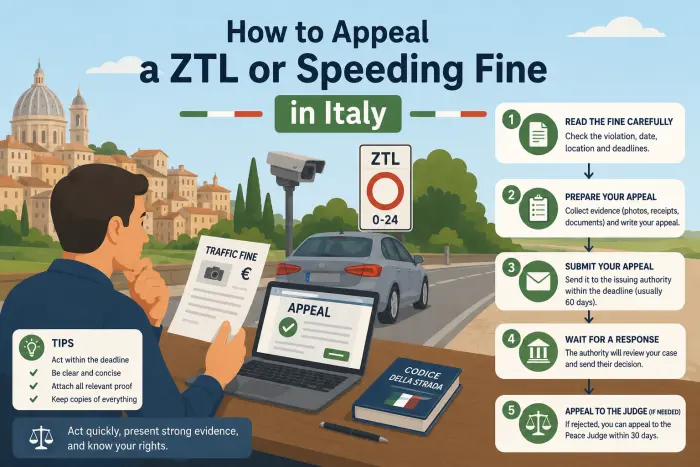
The Two Appeal Paths, and Why They’re Not Equivalent
The Prefect route is essentially an administrative review — you’re asking a government official to reconsider the fine, and reports from travelers who’ve gone this way consistently describe it as a long shot, with rejection being the far more common outcome. Crucially, a rejected Prefect appeal usually means the fine amount doubles, so choosing this path carries real downside risk if your case isn’t unusually strong. The Giudice di Pace route is a genuine judicial process — a formal hearing (or paperwork-based review, depending on the case) in front of an actual judge, and it’s the path experienced travelers and expats generally recommend if you have a legitimate argument, precisely because it doesn’t carry the same automatic-doubling penalty for an unsuccessful outcome.
| Appeal path | Success odds | Downside if it fails | Best for |
|---|---|---|---|
| Prefetto (Prefect) | Generally low | Fine typically doubles | Minor cases, low stakes, fast resolution desired |
| Giudice di Pace (Justice of the Peace) | Meaningfully better with a solid case | No automatic doubling | Genuine documentation errors, well-argued disputes |
Before You Appeal, Verify These Details First
An appeal is only worth pursuing if something about the notice itself is actually wrong — not simply because the fine is inconvenient or you disagree with the underlying rule. Check the license plate on the notice character by character against your rental agreement; a single mismatched digit or letter means the fine may not even apply to your vehicle. Confirm the date and time listed match your actual itinerary, keeping in mind Italy uses 24-hour time, which has tripped up more than one traveler misreading “14:00” as 4pm versus what they assumed was AM. Cross-check the specific location against where you actually were — GPS logs, photos, or a hotel receipt from that day can help settle this quickly.
Is That Notice Even Official?
Before appealing anything, confirm you’re actually looking at a formal fine notice rather than an early-stage payment request from a private collection agency working on behalf of a municipality — these sometimes arrive first, styled to look urgent, and aren’t always the same as the official “verbale di contestazione” that carries actual legal weight and formal appeal rights attached to it. A formal notice includes specific structured details: vehicle plate, exact date and time, precise location, the rule violated, and the fine amount. If what you’ve received looks informal, unclear about which authority issued it, or arrives from an unfamiliar collection entity rather than the municipality or police directly, it’s worth confirming its status with your rental company before assuming you’re already past your appeal window.
Deadlines: How Long Do You Actually Have?
This varies meaningfully depending on where you live, not just when the violation happened. For residents of Italy, the notification period is generally around 90 days from the date of the offense. For visitors living abroad, the window is typically longer and varies by country — some report notification periods extending close to a year, which is part of why a fine can genuinely surface long after a trip is a distant memory. Your formal right to appeal generally only starts once you actually receive the official notice, not from the date of the original violation itself, so a fine arriving many months later doesn’t necessarily mean you’ve already missed your chance to contest it.
Writing the Appeal Itself
A formal appeal needs to be written in Italian, addressed to the correct authority (Prefect or Giudice di Pace, depending on the path chosen), and should lay out your specific argument clearly along with any supporting evidence — a photo showing missing or obscured ZTL signage, documentation proving you weren’t the driver at the stated time, or proof of a plate-matching error. Vague objections along the lines of “I didn’t know” or “the fine seems unfair” carry little weight on their own; a specific, evidence-backed factual dispute is what actually gives an appeal real odds. If your Italian isn’t strong enough to draft this confidently, a local translator or a lawyer familiar with Italian traffic law is a reasonable investment for a fine large enough to justify it — for a small, straightforward fine, this may not be worth the cost relative to simply paying it.
What Happens If the Appeal Fails?
This is where the two paths diverge most sharply, and it’s worth weighing before you file anything. A rejected Prefect appeal typically results in the fine amount doubling, with no further standard appeal step after that within the same administrative channel. A Giudice di Pace case that doesn’t go your way generally doesn’t carry that same automatic penalty, which is a meaningful part of why it’s the more commonly recommended route whenever there’s a genuine case to make, despite requiring more time and effort to pursue.
Is Appealing Actually Worth It?
For a fine you know is accurate and simply wish weren’t happening, appealing rarely changes the outcome and mainly risks the doubling penalty under the Prefect route for no real benefit. For a fine with a genuine, documentable error — a plate mismatch, a date that doesn’t match your actual trip, missing signage you can prove — the Giudice di Pace path has real merit and is worth pursuing, particularly for a larger fine where the effort is proportionate to what’s at stake. Our scams guide covers the broader documentation habits — photographing everything, keeping dated records — that make building this kind of case considerably easier if you ever need to.
💸 Italy Car Rental Sale – Up to 40% Off Today
Find the cheapest car rental deals in Rome and across Italy. Compare prices instantly and lock in your discount before it's gone.
What to Gather Before You Start
Building a case, whichever path you choose, comes down to assembling the right evidence before you file anything rather than starting the appeal and hoping documentation turns up along the way.
| Document or record | Why it matters |
|---|---|
| Original rental agreement | Confirms the exact plate and rental dates |
| Photos or video from your trip, dated | Can establish where you actually were at a given time |
| The fine notice itself, in full | Needed to verify plate, date, time, and location details |
| Any signage photos, if disputing missing/unclear ZTL markings | Directly supports a signage-based appeal argument |
| Hotel or restaurant receipts from the relevant date | Can help establish your actual location if it’s in dispute |
If a fine turns out to be legitimately yours and simply inconvenient, our deposit dispute guide covers a related but different kind of escalation — worth knowing the two situations (a fine you’re contesting versus a charge you believe is simply wrong) call for different approaches. And if you’re weighing whether your specific nationality changes anything about your documentation requirements here, our IDP guide covers a related but separate documentation question worth having sorted regardless of whether you ever need to appeal anything.
Frequently Asked Questions
Can tourists actually appeal a ZTL or speeding fine in Italy? Yes — the same two appeal paths (Prefect or Giudice di Pace) are available regardless of nationality, though success depends entirely on whether there’s a genuine, documentable error in the notice itself.
Which is better: appealing to the Prefect or the Giudice di Pace? The Giudice di Pace generally has better odds for a well-documented case and doesn’t carry the automatic fine-doubling risk that a rejected Prefect appeal does — most experienced travelers recommend it when there’s a real case to make.
What happens if my appeal to the Prefect is rejected? The fine typically doubles automatically, with no further appeal step within that same channel — this downside risk is worth weighing carefully before choosing this path over the Giudice di Pace route.
Does my appeal need to be written in Italian? Yes — a formal appeal is generally expected in Italian, addressed to the correct authority, with your specific argument and any supporting evidence clearly laid out.
How long do I have to appeal after receiving a fine notice? Generally around 90 days from the offense for Italian residents; visitors from abroad typically have a longer window that varies by country. Your right to appeal usually starts from when you receive the official notice, not the violation date.
How do I know if a fine notice is genuinely official? A formal notice includes structured, specific details — plate, exact date and time, location, violation, and amount — issued by a municipality or police authority. Informal-looking requests from unfamiliar collection agencies are worth verifying before assuming they carry the same legal weight.
Is it worth hiring a lawyer to appeal a traffic fine in Italy? For a small, straightforward fine, probably not — the cost may exceed the fine itself. For a larger fine with a genuine documentation error, a lawyer or translator familiar with Italian traffic law can meaningfully improve your odds and is often a reasonable investment.
Most Italian traffic fines aren’t worth appealing — they’re accurate, and prevention through careful driving and route planning remains the better strategy overall. But when a notice genuinely doesn’t match your trip, knowing which of the two appeal paths actually has a fair shot, and what a rejected attempt costs you, turns a confusing bureaucratic process into a much more manageable decision.