
Finding a legal parking spot in Rome is less about luck than about recognizing three colors on the pavement before you commit to a space. Get it wrong and you’re looking at a fine that starts around €41 and climbs fast — get it right and parking in this city is genuinely manageable, even with a rental car and no local knowledge. Here’s the full breakdown our driving in Rome guide promised: the colour system, where free parking actually exists, the apps that make paying simple, and the overnight rules that trip up more visitors than almost anything else on this list.
The Colour-Coded System, in Full
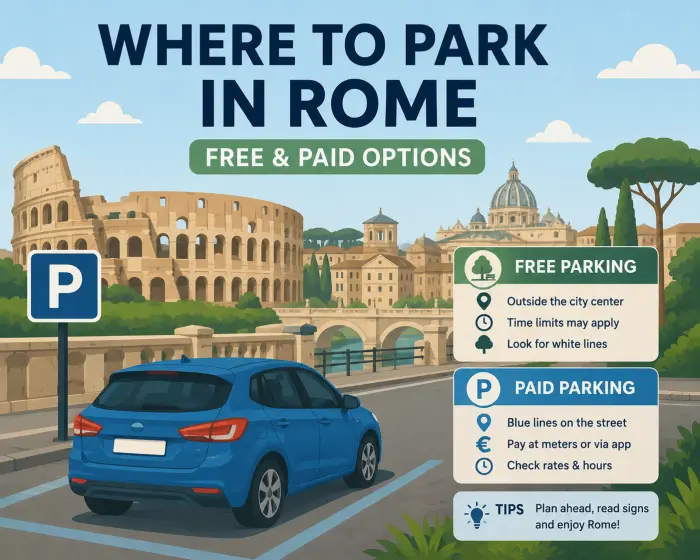
Every legal parking space in Rome falls into one of three categories, marked by painted lines on the road itself:
| Line Colour | Meaning | Can You Park There? |
|---|---|---|
| 🔵 Blue (strisce blu) | Paid public parking | Yes — pay at a nearby meter or via app |
| ⚪ White (strisce bianche) | Free public parking | Yes — where available, though often contested |
| 🟡 Yellow (strisce gialle) | Reserved (residents, permits, disabled) | No — never, even briefly |
Blue-line parking is by far the most common option you’ll encounter near anywhere touristically useful, and it typically runs from around 8:00 to 20:00, though the exact hours are always posted on the meter or a nearby sign — checking that sign, not assuming a standard schedule, is the single habit that prevents most avoidable fines. Rates vary by zone, generally higher the closer you get to the historic centre.
Where the Free (White-Line) Parking Actually Is
This is the detail most visitors never find out until they’ve already paid for several days of blue-line parking they didn’t need to. Free white-line spaces do exist, but they cluster in specific areas rather than being evenly spread across the city:
- Piazza Vittorio and Viale dell’Università, both a short walk from Termini station
- Around the Trastevere train station, though it’s worth being careful here — some nearby streets sit right at the edge of a ZTL boundary, and wandering a block too far turns free parking into a fine. Our ZTL zones guide covers exactly where those boundaries sit.
- Peripheral areas like EUR, near the Palazzo dello Sport, useful if your destination is on that side of the city rather than the historic core
Free spaces fill up quickly, especially near transit hubs, so treat white-line parking as a bonus if you find it rather than a plan to rely on — a blue-line space you’re confident about beats extra time spent circling for a free one that may not materialize.
Park-and-Ride: The Option Most Tourists Never Consider
Rome runs a network of interchange car parks (parcheggi di scambio) at metro and rail stations — Auditorium, Partigiani near Ostiense station, Metronio, Trieste, and Trastevere among them. These offer differentiated, often lower rates specifically designed to encourage parking outside the centre and finishing the trip by metro or bus. If your day involves the historic core — where driving is genuinely more hassle than it’s worth once ZTL zones and scarce parking are both in play — parking at one of these interchange lots and taking the metro in is frequently faster and less stressful than trying to park anywhere near the Colosseum or Vatican directly. Our Colosseum and Vatican parking guide covers the closest legal options if driving all the way in is unavoidable for your trip.
Overnight Parking: Free, But Verify Every Time
Many blue-line zones that charge during the day switch to free overnight — commonly from around 20:00 or later until the following morning — but this isn’t universal, and assuming it applies without checking the posted hours on your specific meter is one of the more common, avoidable mistakes visitors make. Some zones maintain paid hours later into the evening, particularly in nightlife-heavy areas, and the posted sign always overrides any general rule of thumb. Check it every time, even if you parked in a similar-looking zone the night before.
💸 Italy Car Rental Sale – Up to 40% Off Today
Find the cheapest car rental deals in Rome and across Italy. Compare prices instantly and lock in your discount before it's gone.
Paying for Blue-Line Parking: Apps vs. Meters
You can pay at the physical meter with cash or card in most zones, but Rome’s parking apps have become the more convenient option for most visitors, letting you start, extend, or end a session from your phone without hunting for the nearest working meter. EasyPark is the most widely used option and supports QR-code payment directly at many spaces; MyCicero is another common choice. Our Italy parking apps guide covers setup and how these compare if you’d rather sort payment before you’re standing next to the car working it out.
Hybrid and Electric Vehicles: A Real Perk
If your rental happens to be hybrid or electric, it’s worth knowing that these vehicles typically park free even in blue-line zones across much of Rome — a genuine cost saving if your trip includes several days of city parking. Confirm the specific exemption applies in the zone you’re using, since local signage occasionally varies, but this is a real and underused benefit for anyone who booked an electric or hybrid car without realizing parking savings came attached.
What Happens If You Get It Wrong
Parking fines in Rome start at roughly €41 and increase from there depending on the violation — a yellow-zone infraction or a ZTL-adjacent parking mistake tends to cost more than a simple expired meter. As with ZTL fines, a parking ticket on a rental car is typically forwarded to the rental company first, which then charges your card along with an administrative handling fee on top of the fine itself. That extra fee is exactly why getting the colour system right at the start matters more with a rental car than it would with your own vehicle back home.
Frequently Asked Questions
Is street parking in Rome ever completely free? Yes — white-line zones offer free parking, though spaces are limited and cluster in specific areas rather than being available everywhere. Many blue-line zones also go free overnight, but always verify the posted hours rather than assuming.
How much does blue-line parking cost in Rome? Rates vary by zone and typically run higher the closer you are to the historic centre. Exact pricing is always posted on the meter or accessible through payment apps like EasyPark before you commit to a space.
Can I park in a yellow-line zone if I’m just running in somewhere quickly? No — yellow zones are reserved for residents, permit holders, or disabled parking, and there’s no informal exception for a short stop. This is one of the more strictly enforced rules on this list.
Do hybrid and electric cars really park free in Rome? In many blue-line zones, yes. It’s worth confirming the exemption applies in your specific area, but it’s a genuine and often overlooked benefit if you’ve booked an electric or hybrid rental.
Is it worth using a park-and-ride option instead of driving into central Rome? Often, yes — especially for a day focused on the historic centre, where ZTL restrictions and scarce parking both work against driving all the way in. Parking at an interchange lot and finishing by metro is frequently faster and cheaper overall.
Getting parking right in Rome comes down to reading the lines before you commit, not memorizing every rule in advance. Blue means pay, white means free (if you can find it), and yellow means walk away — everything else is just knowing where to look and which app to open. Pair this with our ZTL zones guide before you start driving, and parking stops being the thing that quietly derails an otherwise smooth Rome trip.